
If you're struggling with neck pain, you might wonder if certain methods could offer relief. Incorporating stretching and strengthening exercises, adjusting your workspace ergonomically, or even exploring mindfulness techniques could make a difference. You may also find that therapeutic approaches like heat therapy or massage provide targeted relief. But how do these options work together, and which could be most effective for your specific situation? Exploring the potential benefits of each method could lead you to the answers you need.
Stretching Exercises
When it comes to relieving neck pain, incorporating stretching exercises into your routine can make a significant difference. These stretches help increase flexibility, improve blood circulation, and alleviate tension in the neck muscles. You don't need to spend hours in the gym; just a few minutes a day can yield great results.
Start with gentle neck rolls. Sit or stand comfortably, then slowly roll your head in a circular motion. Do this for about 30 seconds in each direction. This simple movement helps to loosen tight muscles and improve range of motion.
Next, try the lateral neck stretch. While sitting, tilt your head to one side, bringing your ear toward your shoulder. Hold the stretch for 15-30 seconds, feeling the gentle pull on the opposite side of your neck. Repeat on the other side.
Another effective stretch is the chin tuck. By gently pulling your chin back toward your chest, you can strengthen the muscles that support your neck while reducing strain. Hold for 5 seconds, and repeat this 10 times.
You might also want to incorporate shoulder shrugs. Raise your shoulders toward your ears, hold for a moment, and then release. This releases tension in both your neck and shoulders.
Consistency is key; aim to perform these stretches daily. You'll likely find that integrating these simple exercises into your routine not only eases your neck pain but also promotes better posture and overall well-being.
Strengthening Techniques
To effectively relieve neck pain, incorporating strengthening techniques into your routine is essential. Strengthening the muscles around your neck can provide better support, improve posture, and reduce strain. Here are some effective techniques you can try.
Begin with isometric exercises. Sit or stand up straight, and gently push your head against your hands, which should be placed on your forehead. Hold this position for five seconds, then release. Repeat this for the sides and back of your head as well. This method builds muscle without excessive movement, reducing the risk of further strain.
Another effective exercise is the neck tilt. While sitting or standing, slowly tilt your head to one side, bringing your ear toward your shoulder. Hold for 15-30 seconds, then switch sides. This helps strengthen the muscles along your neck and shoulders.
You can also try shoulder shrugs. Stand with your arms relaxed at your sides. Lift your shoulders toward your ears, hold for a moment, then release. This exercise targets the upper trapezius muscles, which play a significant role in neck stability.
Lastly, consider incorporating resistance bands into your routine. Secure a band at head height, hold one end in each hand, and gently pull your head forward against the resistance. This strengthens the neck muscles while promoting stability.
Ergonomic Workspaces
Creating an ergonomic workspace is essential for preventing neck pain and promoting overall comfort during long hours of work. Start by adjusting your chair and desk height. Your chair should support your lower back, and your feet should rest flat on the ground. If needed, use a footrest to achieve this comfortable position.
Next, position your computer monitor at eye level, about an arm's length away. This helps reduce strain on your neck as you won't be looking down or craning your neck upwards. If you work on a laptop, consider using a separate keyboard and mouse to maintain a better posture.
Keep your arms at a 90-degree angle when typing. Your elbows should stay close to your body, and your wrists should remain straight. An ergonomic keyboard and mouse can help keep your wrists aligned, minimizing discomfort over time.
Also, remember to declutter your workspace. Keep frequently-used items within arm's reach to prevent repetitive strain from reaching or twisting your body. Use a document holder if you refer to papers often, positioning it at the same height as your monitor.
Lastly, take regular breaks. Stand up, stretch, and walk around for a few minutes every hour. This movement can relieve tension and help reset your posture.
Mindfulness and Relaxation
To effectively manage neck pain, incorporating mindfulness and relaxation techniques can be a game changer.
You can explore deep breathing exercises, guided meditation, and progressive muscle relaxation to help ease tension.
These practices not only promote relaxation but also empower you to take control of your pain relief journey.
Deep Breathing Exercises
Deep breathing exercises serve as a powerful tool for relieving neck pain by promoting mindfulness and relaxation. When you focus on your breath, you shift your attention away from discomfort and create a sense of calm. This practice can help reduce muscle tension in your neck and shoulders, which often contributes to pain.
To get started, try these simple deep breathing techniques:
- Find a comfortable position: Sit or lie down in a quiet space where you won't be disturbed.
- Inhale deeply: Breathe in slowly through your nose, allowing your abdomen to expand fully.
- Pause: Hold your breath for a moment to deepen the relaxation.
- Exhale gently: Release your breath slowly through your mouth, feeling your muscles relax with each exhale.
As you practice these exercises regularly, you'll notice an improvement in your overall stress levels and a reduction in neck pain.
Incorporating deep breathing into your daily routine can help you manage pain more effectively, promoting a sense of well-being while enhancing your focus and mindfulness.
Give it a try, and see how it makes you feel!
Guided Meditation Techniques
After practicing deep breathing exercises, you might find that guided meditation techniques can further enhance your relaxation and mindfulness. These techniques help you focus your mind, reduce stress, and alleviate tension in your neck area. You can easily incorporate guided meditation into your daily routine, whether you're at home or on the go.
To start, find a quiet space where you won't be disturbed. Use a meditation app or online video that offers guided sessions specifically targeting relaxation and neck pain relief. As you settle in, close your eyes and listen to the soothing instructions. Visualize calming scenes or focus on your breath, allowing any tension to dissolve.
During the session, pay attention to your body. Notice where you hold tension in your neck and shoulders, and consciously relax those muscles. If your mind wanders, gently redirect your focus back to the guide's voice.
With regular practice, you'll develop greater awareness of your body's signals, helping you manage pain effectively. Remember, the key is consistency; even a few minutes each day can lead to significant improvements in your well-being.
Progressive Muscle Relaxation
Progressive muscle relaxation (PMR) is a highly effective technique that can help you release tension and promote relaxation.
By systematically tensing and then relaxing different muscle groups, you can enhance your awareness of physical sensations and reduce stress. It's especially beneficial for alleviating neck pain by encouraging relaxation in the surrounding muscles.
To practice PMR, follow these steps:
- Find a comfortable position: Sit or lie down in a quiet space where you won't be disturbed.
- Start with your feet: Tense the muscles in your feet for about five seconds, then relax them completely.
- Work your way up: Gradually move through each muscle group, including your calves, thighs, abdomen, arms, and neck.
- Breathe deeply: Inhale as you tense the muscles, and exhale as you release them, focusing on the sensation of relaxation.
Incorporating PMR into your routine can help you manage neck pain more effectively.
Aim to practice it daily, and you'll likely notice a significant improvement in both your physical and mental well-being. You deserve to feel relaxed and pain-free!
Heat and Cold Therapy
When you're dealing with neck pain, heat and cold therapy can be effective tools for relief. Both methods offer unique benefits that can help manage your discomfort.
Heat therapy is great for relaxing tight muscles and increasing blood flow to the affected area. You can use a heating pad, warm towel, or even take a warm shower to soothe those aching muscles. Just be sure to limit heat application to 15-20 minutes at a time to avoid burns or overheating.
On the other hand, cold therapy works wonders for reducing inflammation and numbing sharp pain. Ice packs or a bag of frozen vegetables wrapped in a towel can provide relief when applied to the painful area. Similar to heat, you should apply cold for about 15-20 minutes, allowing your skin to return to normal temperature before reapplying.
You might find that alternating between heat and cold therapy yields the best results. Start with cold therapy to reduce swelling and follow up with heat to relax tense muscles. Listen to your body; if one method feels more soothing than the other, go with what works for you.
Regardless of the method you choose, remember to stay within safe time limits and monitor your skin for any adverse reactions.
With consistent use, you could experience a noticeable decrease in neck pain and an improvement in your overall comfort.
Alternative Therapies
If you're struggling with neck pain, alternative therapies might be worth considering.
Techniques like acupuncture, chiropractic adjustments, and massage therapy can offer significant relief and improve your overall well-being.
Let's explore how each of these methods can help ease your discomfort.
Acupuncture for Neck Pain
Relief from neck pain can often feel elusive, but acupuncture has emerged as a promising alternative therapy for many. This ancient practice involves inserting thin needles into specific points on your body to stimulate healing and reduce pain.
If you're considering acupuncture for your neck pain, here are some benefits you might experience:
- Pain Reduction: Many people report significant decreases in neck pain after just a few sessions.
- Improved Mobility: Acupuncture can help increase your range of motion, making it easier to turn and move your neck.
- Relaxation: The process promotes relaxation, which can help alleviate tension that contributes to neck pain.
- Holistic Approach: Acupuncture addresses not just the symptoms but also the underlying causes of your discomfort.
Before starting treatment, it's important to consult with a qualified acupuncturist who understands your unique situation. They'll tailor the sessions to your specific needs, ensuring you get the most out of your experience.
While results may vary, many find acupuncture to be a valuable tool in their journey towards lasting neck pain relief.
Chiropractic Adjustments Benefits
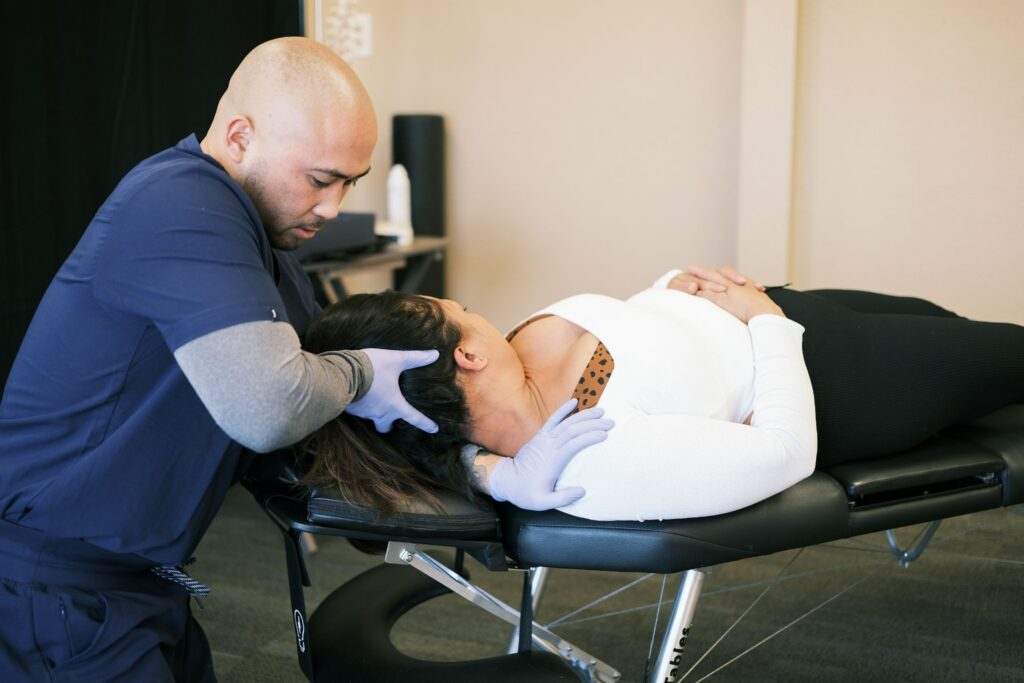
Chiropractic adjustments frequently provide effective relief for neck pain by aligning the spine and reducing tension in surrounding muscles. When you visit a chiropractor, they'll assess your posture, range of motion, and any discomfort you're experiencing. This thorough evaluation helps them tailor the treatment specifically to your needs.
During the adjustment process, your chiropractor uses controlled force to manipulate your spine. This realignment can lead to improved mobility, decreased pain, and better overall function. Many people notice immediate relief after a session, while others may require a few visits to experience the full benefits.
In addition to pain relief, chiropractic care can enhance your body's natural ability to heal. By restoring proper alignment, you can reduce inflammation and improve blood circulation, which aids in recovery.
Many patients also report better sleep and reduced stress levels after receiving adjustments, as the body functions more efficiently when in alignment.
Incorporating chiropractic adjustments into your routine may not only help alleviate your neck pain but also promote long-term wellness. If you're struggling with discomfort, consider scheduling an appointment to see how chiropractic care can benefit you.
Massage Therapy Techniques
Among the various alternative therapies available, massage therapy stands out as a powerful method for alleviating neck pain. It focuses on relieving tension, improving circulation, and enhancing flexibility in the muscles surrounding your neck.
By engaging in regular massage sessions, you may experience significant relief and relaxation.
Here are some effective massage techniques you might consider:
- Swedish Massage: This technique uses long, flowing strokes to relax your muscles and increase blood flow.
- Deep Tissue Massage: Targeting deeper layers of muscle and connective tissue, this method helps break down knots and relieve chronic tension.
- Trigger Point Therapy: This technique focuses on specific tight areas, or "trigger points," that cause pain in other parts of your body.
- Cervical Massage: Specifically designed for neck pain, this technique involves gentle manipulation of the cervical spine and surrounding muscles.
Before starting any massage therapy, it's a good idea to consult a professional. They can tailor the treatment to your specific needs, ensuring you receive the best care possible for your neck pain.
With the right approach, you'll be on your way to feeling better in no time.
Lifestyle Adjustments
Making simple lifestyle adjustments can greatly reduce neck pain and improve your overall well-being. Start by being mindful of your posture throughout the day. Whether you're sitting at a desk or using your phone, keep your spine aligned and shoulders relaxed.
Consider using ergonomic furniture that supports your neck and back.
In addition, take regular breaks when you're working or engaging in activities that require prolonged focus. Stand up, stretch, and move around every 30 to 60 minutes. This helps prevent stiffness and encourages blood flow, which is essential for reducing pain.
You should also pay attention to your sleep habits. Use a pillow that supports your neck properly, keeping your head aligned with your spine.
Try to sleep on your back or side rather than your stomach, as this can strain your neck.
Staying active is key, too. Regular exercise, particularly activities that strengthen your core and neck muscles, can alleviate pain and prevent future issues.
Incorporate stretching and flexibility exercises, such as yoga or Pilates, into your routine.
Lastly, manage your stress levels. Stress can lead to muscle tension in your neck and shoulders.
Find relaxation techniques that work for you, whether it's mindfulness, meditation, or deep breathing exercises.
Conclusion
Incorporating these methods into your routine can considerably relieve your neck pain. By combining stretching and strengthening exercises with ergonomic workspace adjustments, you can reduce strain and enhance comfort. Don't forget the power of mindfulness and relaxation techniques to manage stress. Additionally, heat therapy and alternative treatments like acupuncture can provide targeted relief. Make these lifestyle adjustments, and you'll likely notice a positive difference in your neck pain and overall well-being.